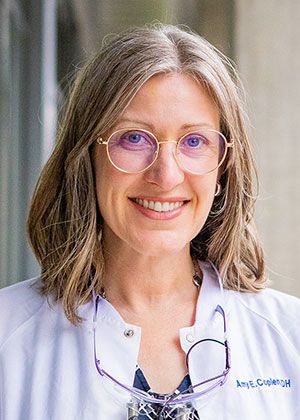
Nobody believes more in the potential impact of dental therapists than Amy Coplen.
The director of Pacific University’s dental hygiene program, Coplen’s passion for the bourgeoning profession led to the development of a three-year educational pilot program at Pacific, to Oregon endorsing dental therapists in 2021, and the accreditation of the university’s new Master of Dental Therapy program in March.
The dental therapy profession aims to bridge the gap in oral care in rural and underserved communities.
“The populations that we care for have such a high need, and many of the needs go beyond what dental hygienists can do,” Coplen said. “The dental therapy profession fits so well with our commitment to serve the public, especially those who have limited access to a dentist.”
Coplen, who holds a bachelor’s and master’s degree in dental hygiene, has served as a member of Pacific’s dental hygiene faculty since 2009 and as program director since 2018. But for an emerging dental therapy program to earn accreditation, the university needed to find a director licensed as a dentist or dental therapist. So Coplen put on her scrubs and stepped up.
“If we were going to have our own (dental therapy) program, we wouldn’t be able to do that without hiring someone else,” Coplen said. “It made the most sense for Pacific financially, and in terms of leadership continuity, if I were able to take that jump.”
And jump she did. Coplen completed Pacific’s pilot program, which required 200 hours in the classroom and lab and 300 practicum hours, all on top of her full-time job.
“It was one of the hardest things I have ever done,” said Coplen, who was licensed by the state of Oregon as a dental therapist in 2024. “I had never gone back to school while working full-time, or with young children at home. It was also really hard to go back to the basics of learning a new clinical skill when I had become an expert in my field.”
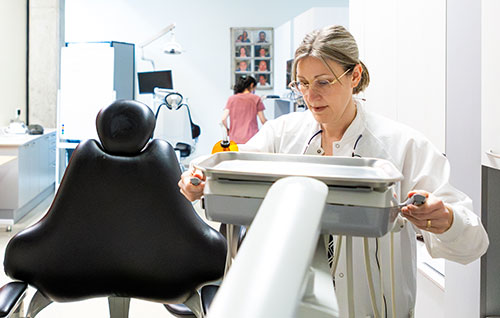
While dental hygienists specialize in cleanings and education on proper oral care techniques, dental therapists are trained to perform basic dental work, including diagnosing and filling simple cavities, performing simple extractions and repairing dental prosthetics, along with performing dental exams.
The longer Coplen spent learning dental therapy techniques, the more she discovered how much she enjoyed the new skill set.
“As a dental hygienist, the variety of what you do has a limit. With dental therapy, it felt like the variety was never going to have a limit,” Coplen said. “There was constantly going to be something new and something challenging. So the combination of helping people and something being different every day, and the complexity and skill required, felt really satisfying.”