
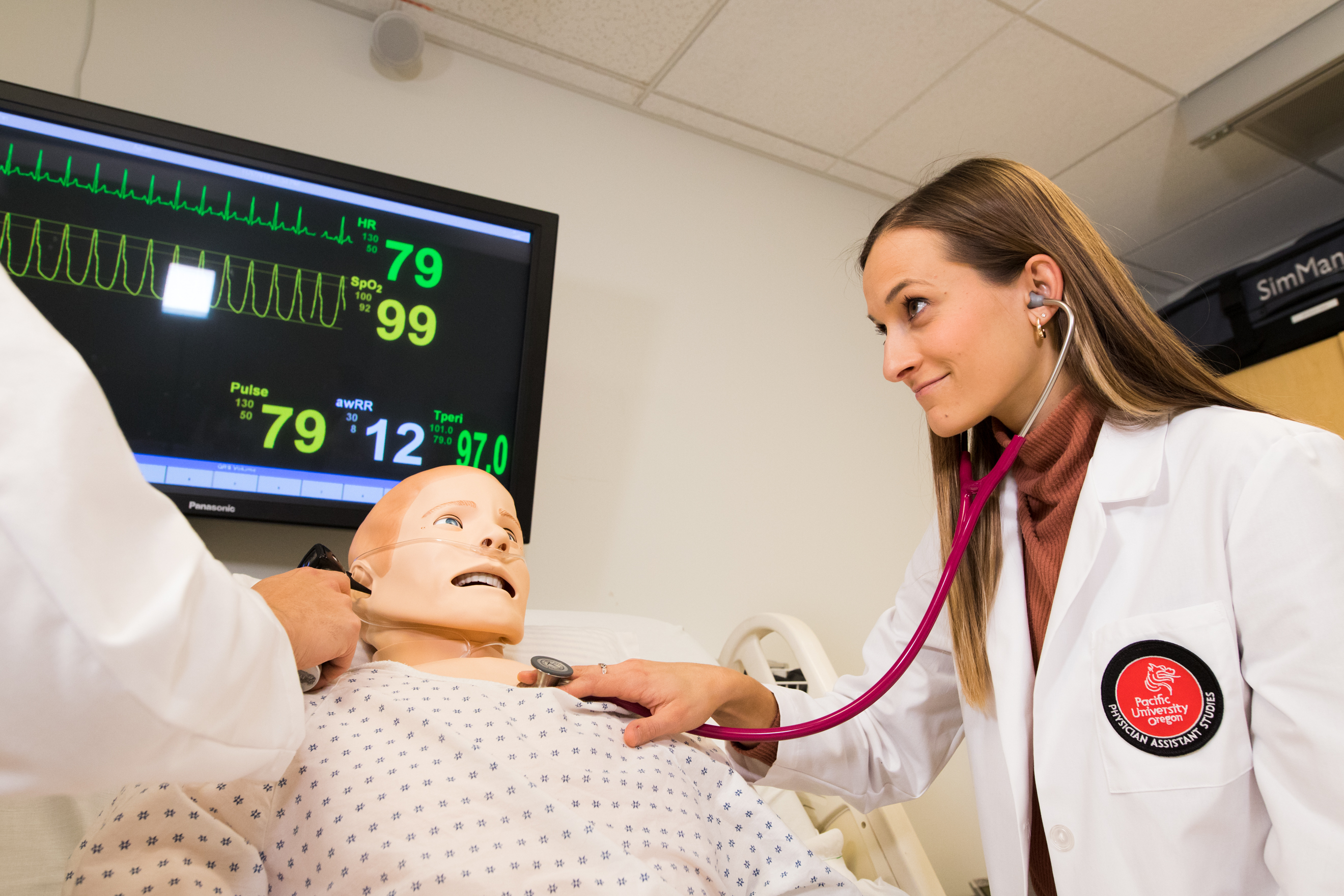
Physician Associate Provide Thoughtful, Accessible Healthcare
Pacific’s Master of Science in Physician Associate Studies is the perfect place to take your passion for healthcare and turn it into a rewarding career.
Physician associate have become an integral part of the healthcare landscape since the first official PA training began in 1967.
Found everywhere from urgent care centers to university hospitals, the demand for physician associates continues to rise, with a 28% job growth rate projected over the next ten years.
A recent U.S. News & World Report ranked physician assistant as the 4th best job in terms of satisfaction, pay, and outlook.
And it’s not hard to see why.
Requiring only a master’s degree, the PA field has made seeking healthcare more accessible, as physician associates can diagnose, treat, and prescribe medication for those in need in a variety of settings.
Want to learn more? Here’s what you need to know about becoming a physician associate.
What is a Physician Associate?
Physician associate are highly-trained generalist healthcare professionals who treat patients in a way similar to physicians and medical doctors.
PAs help patients at every step of the treatment process from collecting medical histories to physical exams to prescribing medications and ordering lab work.
PAs work independently with other providers when called for, but can develop and execute treatment plans without a medical doctor present.
Due to their generalist training, PAs treat a wide variety of conditions, and, when needed, can refer patients to specialists for more advanced observation and care.
Are Physician Associates Doctors?
While PAs serve in many of the same roles as a family physician or general practitioner, they are not medical doctors and do not complete a medical residency.
Given the diverse way physician associates can treat those in need, it can be difficult to understand how PAs are different from doctors and even nurse practitioners.
| Physician Associate (PA) | Medical Doctors (MD) | Nurse Practitioner (NP) | |
| Education Required | Masters of Science in Physician Associate Studies (MS) | Doctor of Medicine and 4 years of medical residency | Masters of Science in Nursing (MSN) |
| Duties | All three healthcare careers can diagnose, treat, and prescribe medication for patients in need without restriction. | ||
| Environments | Hospitals, private practice, clinics, and urgent care settings. More generalized. | Hospitals, private practice, and specialized settings. | Hospitals, urgent care, and assisted care facilities. Can specialize. |
Each healthcare provider can perform a variety of treatments without oversight, so the primary difference between the three is the level of education and training required for licensure.
How Do You Become a Physician Associate?
The path to becoming a PA is similar to that of the other non-MD healthcare professions (fields like physical therapy, audiology, or optometry) in that it begins with a thorough education that is later coupled with on-the-job clinical training.
Steps to Begin Practicing as a Physician Associate
- Fulfill PA school prerequisites. PA school applicants are required to have a strong background in math and science, potentially as the result of a Pre-Physician Associate program.
At Pacific, a completed bachelor’s degree is not required and can instead be completed during your first year of the Master’s program.
- Complete clinical observation. Programs vary, but many will require students to have a certain amount of hours spent observing medical professionals in the workplace.
- Apply through CASPA. The Centralized Application Service for Physician Associates (CASPA) allows you to apply to multiple schools at once using the same transcripts and letters of recommendation.
- Attend PA school. PA programs are rigorous, covering a wide variety of healthcare topics while also making time for intense clinical training.
Pacific’s PA school takes place over seven consecutive semesters, including summer courses.
- Pass the PANCE. The Physician Associate National Certifying Exam (PANCE) is one of the last steps in becoming a PA.
Pacific students routinely pass the exam at a rate above the national average.
Where do Physician Associates Work?
Due to the diverse nature of their training, PAs can work in a wide variety of settings and assist a large number of patients on a daily basis.
Some examples of environments physician associates thrive within include:
- Private Practice. Whether alongside a family physician or as part of a team in a specialized practice such as pediatrics or internal medicine, PAs can administer medical procedures and form treatment plans on an in or outpatient basis.
- Hospitals. PAs succeed in hospital settings as both generalists and specialists, performing minor surgeries and attending to patient needs through clinic rounds.
- Schools. Serving as both educators and practicians, PAs can work in a variety of educational settings ranging from universities to K-12 school districts.
- Assisted Care Facilities. Hospice, geriatric care, and rehab environments present complex challenges for PAs who not only get to flex their clinical muscle but provide compassionate routine care.
Physician associates who want to pursue administrative and management roles can do so with a DMSc degree.
How Much Does a Physician Associate Make?
A large part of the outstanding job satisfaction physician associates report is due to the high salary that accompanies the career.
Licensed PAs can make anywhere from $101,000-$128,000 annually, making physician associate studies one of the highest paying healthcare careers that does not require a medical doctorate.