Pacific University Professor Kerry Mandulak teaches that advocacy is a critical part of being a speech-language pathologist.
She and her colleagues are practicing that advocacy, working to raise awareness of the importance of speech-language pathology and audiology care, as well as the challenges standing between patients and the services they need.
“I think that advocating for our services, teaching students how to advocate for themselves, and also teaching them to advocate for their services is how we are going to be able to serve the most people,” she said.
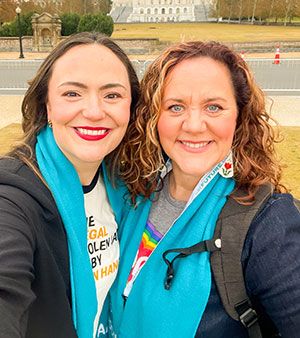
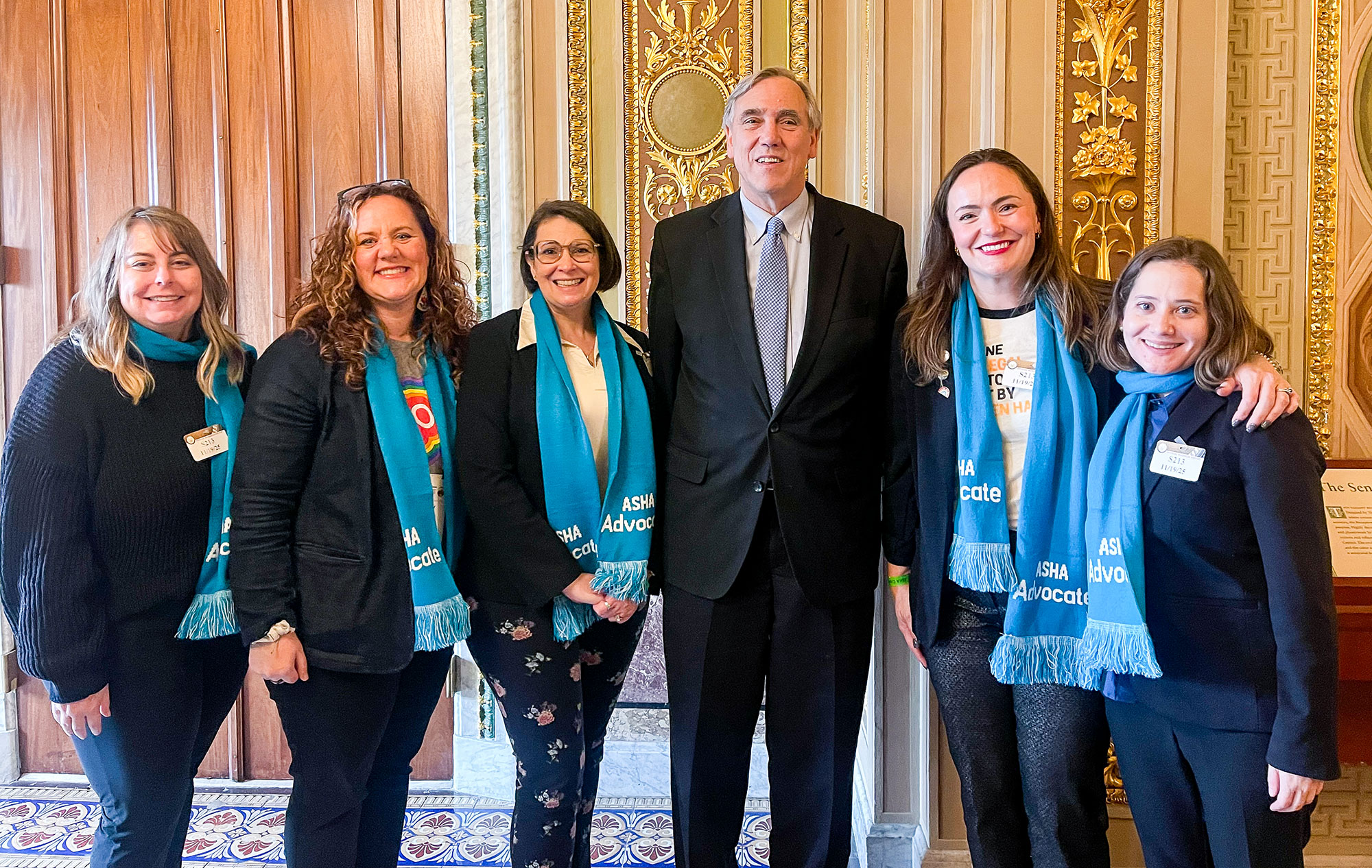
In November 2025, Mandulak and fellow Pacific Professor Jordan Tinsley DHSc '25 joined 300 other members of the American Speech-Language Hearing Association (ASHA) for Capitol Hill Day in Washington, D.C. There, they were able to meet with Sen. Jeff Merkley, as well as staffers for Sen. Ron Wyden, Rep. Suzanne Bonamici and Rep. Cliff Bentz.
The 30-minute conversation with Merkley provided the delegation the opportunity to present facts about speech and hearing services in Oregon, about Pacific University’s graduate speech-language pathology and audiology programs, and about the success stories of people who have benefited from receiving services.
“He asked really good questions,” Tinsley said. “It was a nice conversation. We were able to bring up a couple of bills that ASHA was hopeful that senators and representatives would sign on to.”
Tinsley talked about the work she does in gender-affirming voice and communication training, a more specialized area of the field that she said needs to be more broadly available to provide culturally-responsive services for the entire community because speech and communication disorders don’t discriminate based on gender or gender-identity.
Mandulak used the opportunity to demonstrate how legislation on higher education has a direct impact for affect his constituents and students in Pacific’s speech-language pathology and audiology programs. Recent changes to the definition of “professional programs” for Pell Grants, for example, has limited graduate student loan availability for students working to become speech pathologists and audiologists.
“I wanted to discuss the Oregon workforce and getting our students out there in the world, and the fact that our program attracts a really diverse set of students that wouldn’t otherwise get to be a speech pathologist,” Mandulak said. “There is the whole issue around student loans and not being designated as a ‘professional’ profession anymore. We want to be able to keep offering this opportunity. I wanted him to understand that if we can’t get students, then we can’t have these professionals.”