
Why Study Dental Therapy?
Prepare for a meaningful career in oral healthcare through Pacific’s innovative joint program leading to a BS in dental hygiene and MS in dental therapy.
Dental therapists help expand access to preventive and restorative oral healthcare to communities that are often underserved. Pacific’s dental therapy program is the fourth accredited program in the U.S., the second to offer a master’s degree, and the only dental therapy program in Oregon.
Designed to bridge the gap in oral care in rural and underserved communities, dental therapists are mid-level dental care providers who work under the supervision of a dentist in the way that a physician’s associate works with a physician. Dental therapists are trained to perform basic dental work, including diagnosing and filling simple cavities, performing simple extractions, repairing dental prosthetics and conducting dental exams.
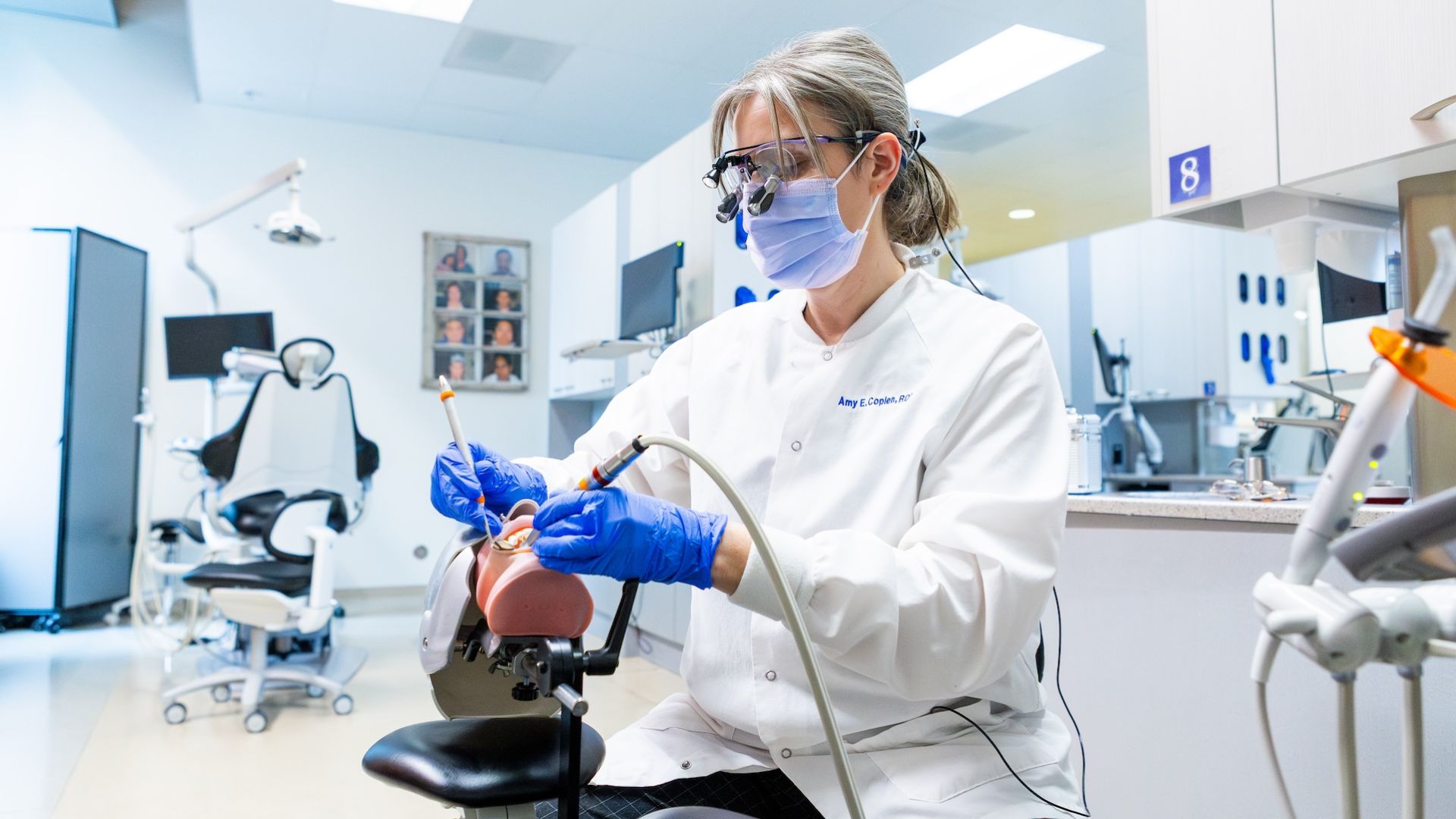
Students in Pacific University dental therapy program combine hands-on clinical experience with community practice. Through Pacific’s centered approach, you will build clinical confidence, learn in interprofessional settings, and graduate ready to serve communities that need you most. As a dental therapy student at Pacific, you will learn concurrently with Pacific dental hygiene students for the first two years of the program, with additional courses specific to the skills required of dental therapists. The third year will consist primarily of practicum experiences, enabling you to hone your craft in clinical settings under the supervision of licensed dentists.
As a trusted leader in health professions education, Pacific University offers rigorous academics, supportive faculty mentorship and extensive clinical immersion. Our students learn by doing from the start, with a curriculum that emphasises prevention, evidence-based decision-making and team-based practice. Earning your master’s degree in dental therapy at Pacific means joining a community that believes oral health is essential to overall well-being — and that equitable access to care changes lives.
What Can You Do with a Master’s Degree in Dental Therapy?
Pacific graduates with a master’s degree in dental therapy can go on to become licensed oral healthcare professionals who provide dental health services directly to patients, working under the supervision of a dentist.
According to the American Dental Therapy Association, 14 states recognize the dental therapy profession, including eight in the Western U.S. The Oregon Legislature approved dental therapy in 2021, thanks in part to the advocacy of Pacific faculty members.
As more states recognize dental therapy and authorization expands, employers may increasingly hire dental therapists to increase capacity, improve quality metrics, and lower the costs associated with deferred treatment. Compensation varies by region and setting and is competitive with other midlevel oral health roles.
Dental therapists are in demand across settings that prioritise access to care and team-based practice. Graduates of dental therapy programs often build careers in:
- Community health centers and Federally Qualified Health Centers
- Indian Health Service and Tribal clinics
- Public health departments and school-based programs
- Hospital-affiliated dental clinics
- Private and group practices committed to team-based models
- Mobile and satellite clinics that address transportation and scheduling barriers
By extending care into schools, community clinics, and mobile services, dental therapists reduce travel burdens and connect patients with regular, preventive and theraputic care. These efforts are associated with decreased wait times, improved oral health outcomes and fewer avoidable emergency department visits for dental pain or infection.
Education and prevention are at the core of daily practice. Dental therapists provide anticipatory guidance, coach families on diet and home care, and collaborate with a variety of health professionals. The result is a healthier community and a stronger connection between oral health and overall health — outcomes that reflect Pacific’s mission and the promise of the profession.
Dental Therapy Curriculum
Pacific University’s dental therapy program blends biomedical and dental science foundations with intensive clinical training. Coursework introduces dental anatomy, pharmacology, diagnosis and prevention, oral pathology, radiography, infection control, operative dentistry, pain management, and community-based practice.
You will engage in simulation and laboratory experiences and progress to supervised clinical care that emphasises prevention, minimally invasive dentistry, and early intervention. Pacific dental therapy students learn to diagnose and treatment plan within their scope, operative dentistry, perform nonsurgical extractions of primary teeth, and coordinate care within interprofessional teams.
From your first semester forward, you will gain real-world experience serving diverse patient populations. Pacific’s strong network of clinical partners includes community health centers, Tribal and urban clinics, school-based programs, and hospital-affiliated sites. As you advance, you will take on greater responsibility with faculty support, building the confidence to practice safely and independently within your scope at graduation. Our approach helps you grow as a clinician and as a communicator who can partner effectively with patients and families with:
- Integrated curriculum that connects classroom learning with hands-on patient care
- Access to labs and contemporary restorative techniques
- Community rotations that strengthen cultural responsiveness and population oral health skills
- Interprofessional learning with students in other health disciplines across Pacific
- Faculty who are committed to mentorship, feedback and student success
Pacific’s training prepares graduates for state or Tribal authorization and licensure pathways in all 14 states that allow dental therapy. Our faculty will guide you through requirements so you understand how to align your clinical experiences with the jurisdictions where you plan to practice.
How to Apply
Prospective students interested in dental therapy apply for the joint degree program to earn a bachelor of science in dental hygiene and master of science in dental therapy. Admissions for Pacific University’s Dental Therapy program follows the same rigorous standards and timeline as the dental hygiene (BSDH) program, emphasizing academic preparedness, professional motivation and the ability to be a compassionate dental therapist. Prospective students must complete the same prerequisites for the BS in dental hygiene.
The application process is centralized through the ADEA DHCAS (Dental Hygiene Centralized Application Service). While clinical experience is not a requirement, we highly recommend at least 20 hours of dental shadowing to demonstrate a clear understanding of the profession. Applications typically open in late October with a final deadline of March 1 for an August entry. Review complete admissions information.
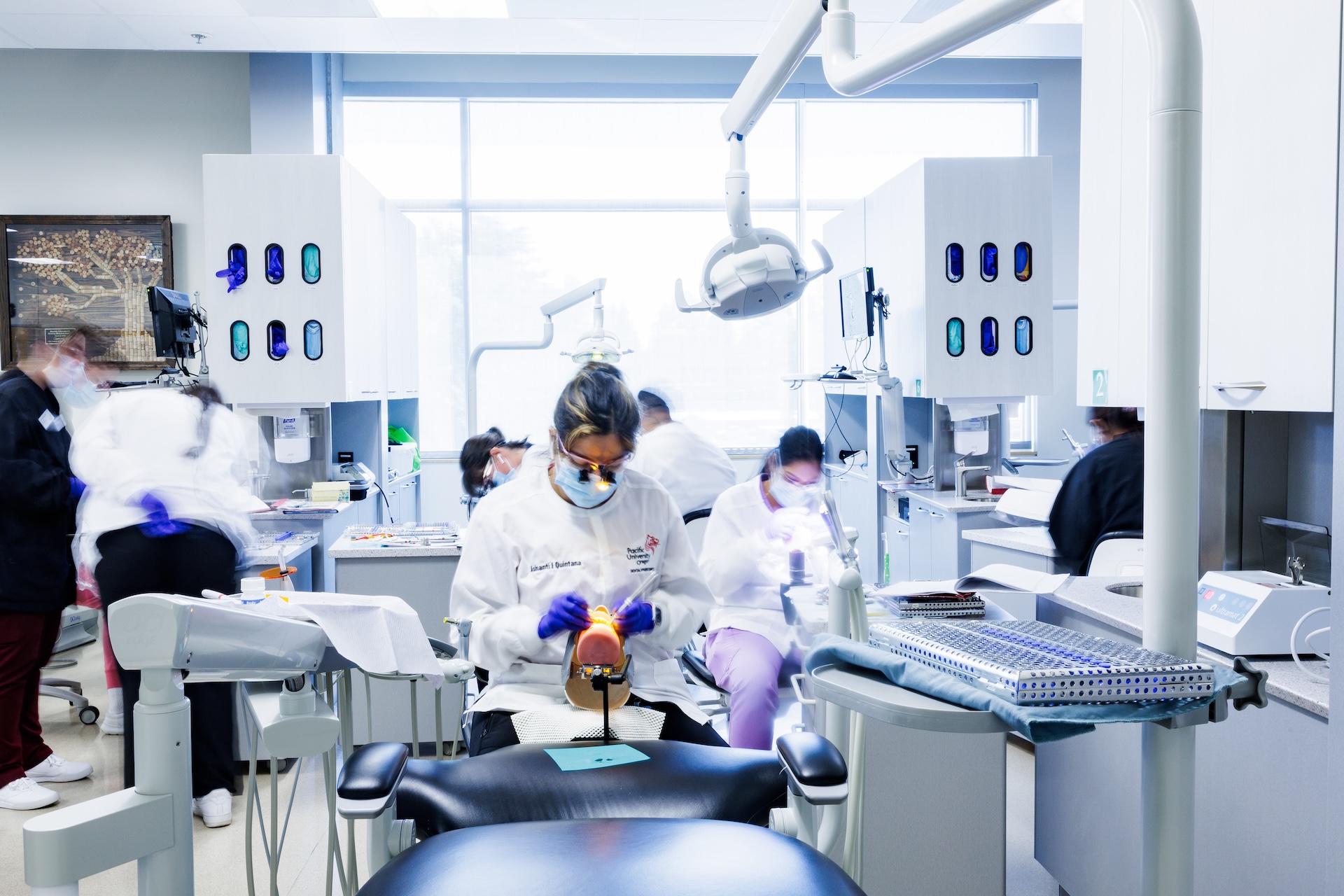
Pacific Dental Clinic
Dental hygiene and dental therapy students provide care to diverse patient populations in the 16-chair Dental Clinic, with an emphasis on providing care for patients with limited access to dental care.






Leah Baldwin | Director of Graduate and Professional Enrollment Operations
503-352-7224 | leahbaldwin@pacificu.edu
The School of Dental Health Science educational program in dental therapy at Pacific University is accredited by the Commission on Dental Accreditation. This program meets the educational requirements for licensure or certification in these U.S. states and territories. Additional student learning outcome and curriculum information is available in the academic catalog.
