Bringing The American West Alive

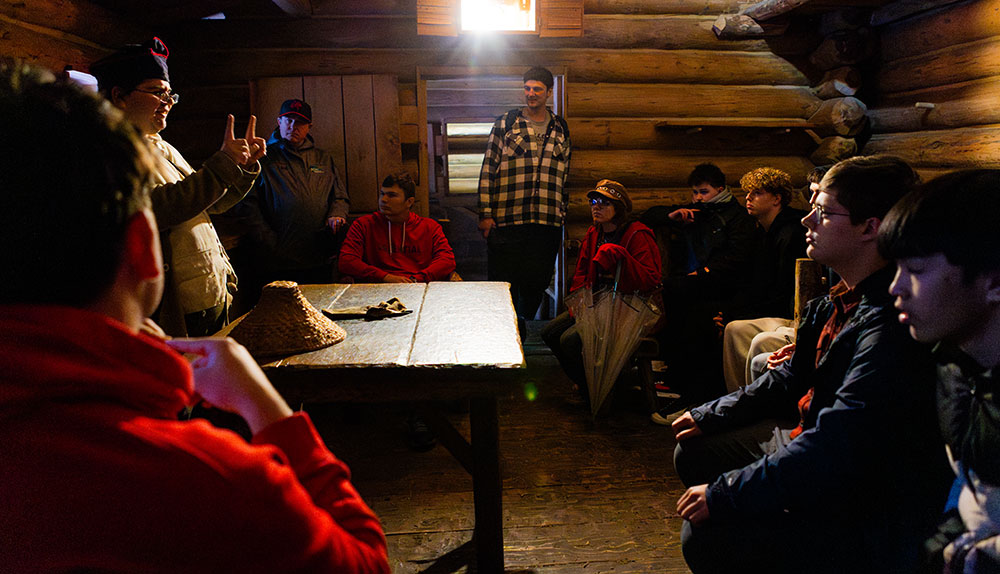
A Class Of Students Listen To A Park Guide Clad In Buckskins Inside Fort Clatsop
Andy Haugen '11, MAT 13, plaid shirt in center, listens with students in his History of the American West class as a Fort Clatsop National Historic Site ranger talks about the living conditions the Corps of Discovery experienced while living in the fort in the winter of 1805-06. Photo by Thomas Lal.

As Valley Catholic High School students stepped off the bus into the parking lot at Fort Clatsop at the Lewis & Clark National Historical Park, they were treated to a day much like the Corps of Discovery experienced during the winter of 1805-06.

Gray and gloomy, a light but steady rain kept everything damp, including the students, some ill-prepared in hooded sweatshirts and shorts. But the rain did little to dampen the spirits of their teacher, Pacific University alumnus Andy Haugen ’11, MAT ’13. He grinned as he told his students they would experience the site the way the explorers did over 200 years ago.

“You’re walking the same ground that they did,” Haugen called out, recalling that Corps member Patrick Gass noted in his journal that it rained all but 12 of the 102 days they spent there.

The wet weather was just another tool Haugen has used to separate fact from myth in a senior-level social studies course that took a deeper look into the history and lore of the Western U.S.

“History of the American West” was made possible by a Teaching America250 Award by the Jack Miller Center. One educator in each state received the $5,000 grant to develop an educational project focused on the 250th anniversary of the signing of the Declaration of Independence. Haugen, a social studies teacher and librarian at Beaverton’s Valley Catholic, was the Oregon recipient.

A history major as an undergraduate at Pacific before earning his Master of Arts in Teaching, Haugen said the goal of the class was to take a deeper look into the individuals and moments that shaped the West, emphasizing that the region has, and continues to write, a complex history.

“Everybody thinks of John Wayne or of the Native American chief,” Haugen said of the romanticized version that many consider the West, “but the interconnected stories, the figures, and the policies of the West are all intertwined. They had a huge effect on the way that not only the West was shaped, but also on America. I think it’s an often-overlooked segment of American history.”

Unlike survey classes, where textbooks summarize dates and moments of history, Haugen’s students were challenged to critically think about what makes the West so complex. His primary text was The Essential West, a collection of essays by Elliott West that touches not only on Lewis & Clark, but also the California and Colorado gold rushes, race relations, children on the frontier, Mormon migration, and the buffalo as a cultural icon.

Readings and essays were supplemented by a look at how popular culture interprets the West. Haugen presented several Hollywood movies, including John Wayne’s “The Searchers” and Matt Damon’s 2010 adaptation of “True Grit,” documentaries on Kit Carson, Jesse James, and Billy the Kid; and Ken Burns’ documentary on Lewis & Clark. Students also played the classic “Oregon Trail” computer game and studied the interpretations of the West through art and music. 
Image
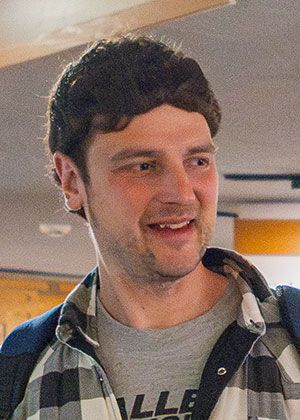
Headshot of Andy Haugen
Text Box

“Pacific trained me to uplift the students I am working with by reinforcing that any student can have success. I think that students are more than willing to meet you halfway if you are able to treat them with respect and you’re able to engage them."

— Andy Haugen '11, MAT '13

Body
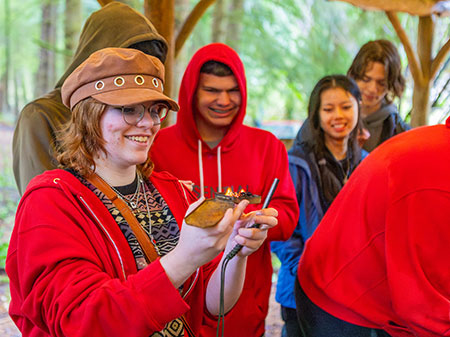
A student wearing a red shirt and brown hat with a burning tinderbox in her hands.
Aofie Hughes, a student in Andy Haugen's History of the American West Class, holds a tinderbox with flame that she started with materials that would have been used during the Lewis & Clark Expedition. The goal of the class developed by Haugen was to bring the history of the West alive though reading, study of popular culture, and experiences like field trips to Fort Clatsop and Fort Vancouver. Photo by Thomas Lal.

At the end of the class, each student will present a final project based either on a subject the class studied, or on a current topic shaping the West, such as water rights, mining or environmental policy.

The art of critical thinking about history, and the desire to teach that skill to the next generation, was ingrained in Haugen as a student at Pacific.

“Pacific taught me how to critically think and engage with material,” said Haugen, who also holds a master’s degree in history from Arizona State University. “My classes taught me how to be able to write and assess. The work with primary sources and learning how to engage students of all different backgrounds and interests was also critical.

“I became a much better student at Pacific University,” he added.

The students in the History of the American West have responded well to Haugen’s approach.

“I took this class because I was interested in learning more about the West. Being able to take notes, watch videos and absorb it all has been really fun,” said Aoife Hughes. “The incorporation of games has been fun. And comparing history to things now and how it’s changed.”

In their two hours at Fort Clatsop, students tested their knowledge of the Lewis & Clark Expedition in the site’s exhibit hall, learned about how both the expedition and the Clatsop people used native plants, and toured the replica of the corps’ fort. They experienced the realities that affected the men’s comfort, touring the fort’s tight enlisted men’s quarters and passing around a leather moccasin saturated by the day’s steady rain.

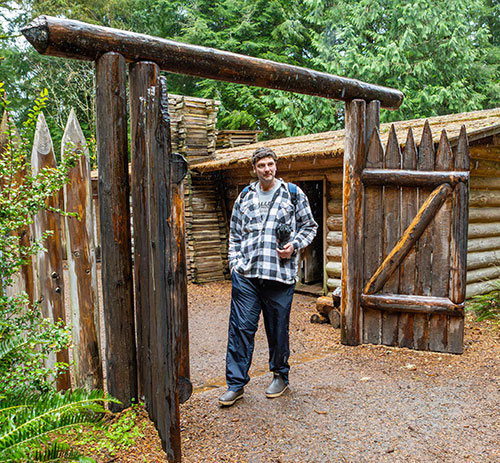
Man with brown hair and in a plaid blakc and white overshirt stands inside the gate of Fort Clatsop.
Andy Haugen '11, MAT '13 contemplates what life for the Corps of Discovery was like at Fort Clatsop near Astoria, Oregon. Haugen took students in his History of the American West class to the replica of the fort near the original site that the Lewis & Clark Expedition wintered at. Photo by Thomas Lal.

Liam Plep said that the trip to Fort Clatsop, along with an earlier field trip to Fort Vancouver, added another valuable dimension to the educational experience.

“Mr. Haugen has brought history to life pretty well, especially with these field trips,” Plep said. “Bringing us out to these immersive experiences and learning history in real life, I feel like that’s a better way to learn history, going to these places and seeing what it’s all about.”

Originally envisioned as a college-caliber course, Haugen had to adjust his expectations as he realized his students needed a better baseline understanding of the people and moments that shaped the West. Haugen said that Pacific taught him that sometimes the best teaching approach is to meet students where they are.

“Pacific trained me to uplift the students I am working with by reinforcing that any student can have success,” he said. “I think that students are more than willing to meet you halfway if you are able to treat them with respect and you’re able to engage them. And I think students are genuinely excited to go explore a place they’ve never been before and have enjoyed this class.”

As they explored the artifacts in the Fort Clatsop visitor’s center, it was clear that history was coming alive. Students examined the different types of firearms the corps used on their three-year journey, the buckskins they wore, and depictions of the animals the expedition encountered.

It all helps them better understand not only the true history of the American West, but also to further shape it.

“I think if they understand the context of those things and find things that pique their interest, they will be more than willing to be engaged and be part of the processes that help shape where they live,” Haugen said.

Publication Date