The School of Pharmacy at Pacific University recognizes that discovery research is a fundamental tool in the education and training of future pharmacists and scientists.
A primary goal of our program is to build a collaborative, extramurally-funded research environment. We are dedicated to providing high-impact training for PharmD, PharmD/MS, MS and undergraduate students from Pacific University’s Forest Grove Campus who are pursuing careers in pharmacy and pharmaceutical sciences.
Pharmacy students have multiple opportunities to become involved in research throughout their didactic training. They may participate as volunteers in research laboratories, enroll in research-focused electives, or engage in the School of Pharmacy Research & Scholarship Track. In their final professional year, students may also complete one or two 6-credit APPE (Advanced Pharmacy Practice Experience) electives dedicated to research. Undergraduate students also participate in research through 8–10 week summer research experiences offered by the School of Pharmacy, providing early exposure to biomedical and pharmaceutical sciences investigation and mentorship by faculty researchers. Through these opportunities, the School fosters a vibrant and collaborative research environment that strengthens scholarly impact and contributes to Pacific University’s recognition as a leading private research institution in the Pacific Northwest.
A Collaborative, Mentorship-Driven Research Environment
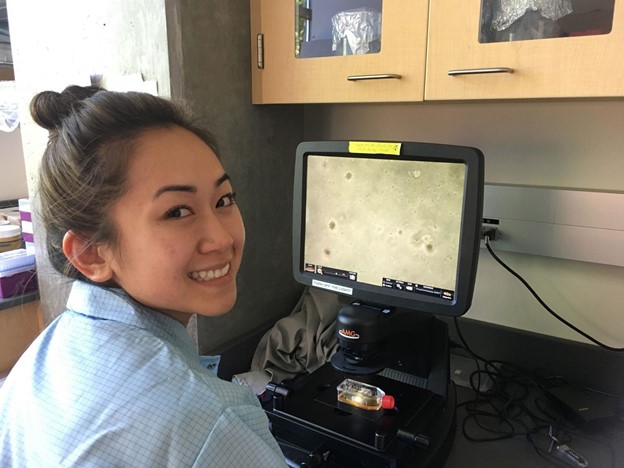
We take great pride in cultivating a research environment that supports both professional growth and technical excellence. Students work closely with faculty mentors in the research laboratory, gaining hands-on experience that prepare them for careers in the biomedical and pharmaceutical sciences. Our students regularly:
- Conduct research in a cutting-edge laboratory setting
- Present their findings at regional and national conferences
- Contribute to peer-reviewed publications alongside faculty
State-of-the-Art Research Facilities
Our laboratories are equipped with modern instrumentation that supports advanced scientific discovery and enables students and faculty to explore complex scientific questions and generate high-quality, impactful research.
Faculty Research Areas
Nicola Carter
Parasite Metabolism & Drug Discovery
The Carter Lab investigates how the human parasite Leishmania donovani survives nutrient restriction and environmental stress within the host. By integrating large-scale proteomics with targeted molecular and cellular approaches, we identify metabolic vulnerabilities that can be translated into new therapeutic strategies. The lab also explores natural products from plants and marine organisms as potential antileishmanial agents. Students engage in hands-on research that connects fundamental parasite biology with real-world drug discovery.
Fawzy Elbarbry
Pharmacokinetics & Cardiovascular Therapeutics
Research in the Elbarbry Lab advances personalized medicine through Bayesian pharmacokinetic modeling to optimize drug dosing across diverse patient populations. This work is focused on improving therapeutic outcomes and medication safety in special populations, including individuals with obesity and renal impairment. In parallel, the lab investigates small natural molecules that modulate renal arachidonic acid metabolism as a novel approach to regulating blood pressure and protecting cardiovascular health. Students gain experience at the intersection of quantitative modeling, translational science, and therapeutic innovation.
Michael Espiritu
Venom-Derived Peptide Therapeutics
The Espiritu Lab discovers drug-like peptides from natural venom sources with the potential to treat pain. By identifying and characterizing peptide toxins that target key pathways in nociception, our lab aims to develop novel analgesic therapeutics. Students participate in cutting-edge research bridging natural product discovery, pharmacology, and translational drug development.
John Harrelson
Drug Metabolism, ADME & Nicotine Addiction
Research in the Harrelson Lab explores the mechanistic and structural factors that influence variability in drug response. As an ADME scientist and medicinal chemist, Dr. Harrelson investigates the metabolism of nicotine and the biological basis of addiction, including natural products (such as cinnamon components), vaping agents, terpenes in cannabis products, and genetic variability in nicotine metabolism. The lab has identified time-dependent inhibitors of the nicotine-metabolizing enzyme CYP2A6 and is advancing these discoveries toward clinical and translational impact. Students develop expertise in drug metabolism, medicinal chemistry, and mass spectrometry-based analysis.
Youssef Naguib
Drug Delivery & Nanomedicine
Research in the Naguib Lab focuses on advanced drug delivery systems, including nanoparticle- and microparticle-based formulations designed to improve therapeutic effectiveness. Dr. Naguib’s work investigates novel combination therapies to overcome cancer resistance, particularly in treatments involving agents such as paclitaxel. Additional research areas include improving the solubility of poorly soluble drugs, sustained-release injectables and implants, topical formulations, and microneedle-enabled transdermal delivery systems. Students gain hands-on experience in formulation science, translational drug development, and emerging delivery technologies.
Sigrid Roberts
Polyamine Metabolism & Antileishmanial Therapeutics
The Roberts Lab studies the biology of Leishmania parasites with a focus on their dependence on polyamine metabolism for growth and survival. Having established this pathway as a promising therapeutic target in Leishmania, the lab now applies molecular and biochemical approaches to better understand polyamine function and to guide the development of future antileishmanial treatments. Students contribute directly to research aimed at combating neglected tropical diseases.
Brendan Stamper
Medicinal Chemistry & Data-Driven Drug Discovery
The Stamper Lab examines structure-toxicity relationships to understand how subtle chemical modifications influence biological outcomes. By studying how molecular structure affects toxicologic mechanisms, the lab contributes to safer and more effective drug design. Leveraging transcriptomic databases and bioinformatic tools to generate data-driven hypotheses is a major driver of the investigations in this laboratory. Students engage in self-directed research that integrates computational analysis with hands-on medicinal chemistry and toxicology.