
This story is part of our celebration of the 26 Uplifting Moments of 2026.

Explore All 26 Moments

Providing Age-Friendly Care To Help Older Adults Thrive

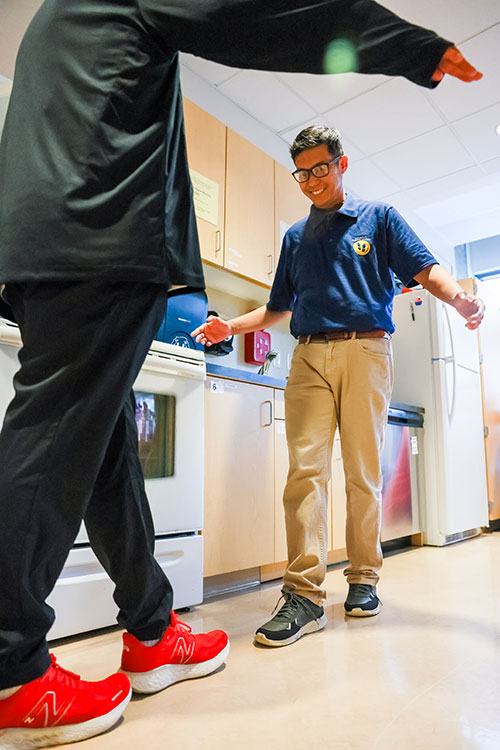
Two occupational therapy students practice balance exercises.
Assistant Professor of Occupational Therapy Davie Nicolas works with a student on balance exercises as part of the Otago balance program. The evidence-based fall-prevention program is one way Pacific's School of Occupational Therapy is teaching age-friendly care for older adults. Photo by Thomas Lal.

As the No. 1 private preparer of healthcare professionals in Oregon, Pacific University is working to prepare future providers to care for everyone, from their first years to their golden years.

For Sarah Foidel, director of Pacific’s School of Occupational Therapy, that means helping students embrace the value of working with older adults through Pacific’s participation in the Oregon Geriatrics Workforce Empowerment Program.

“Working with older adults, particularly in our Western culture, is not as honored,” she said. “But I’ve always enjoyed the company of older adults. I am fascinated by people’s amazing life stories, their resilience, the things they give back.”

Funded by a five-year, $5 million grant awarded to Oregon Health & Science University, with Pacific as a sub-awardee, GWEP is designed to educate healthcare providers how to better serve the needs of an aging population.

The need is great and is only getting greater. According to data compiled by the Oregon Journalism Project, Oregon has the 11th-oldest population in the U.S., with nearly 20% of Oregonians aged 65 or older.

Since the program began in 2024, Foidel has played an active role in educating healthcare providers across the state on addressing the state’s aging populations. She has conducted over 30 presentations and workshops on age-friendly care and developed online modules on dementia care for community health workers and providing culturally-relevant care to members of the Confederated Tribes of Grand Ronde.

She also provides learning opportunities for students in Pacific’s College of Health and Rehabilitation Sciences to better serve Oregon’s aging population.

“So many people want to specialize with kids. There are fewer people passionate about helping older adults thrive,” Foidel said.

Meeting The Needs Of Students & Patients

A national program funded by grants from the U.S. Health Resources and Services Administration, GWEP provides education on community-based age-friendly care grounded in what the program refers to as its Four M’s: mental health, medication, mobility and what matters most to patients.

Pacific is one of three educational partners in Oregon GWEP, and Foidel believes that Pacific’s vast graduate healthcare programs and its longtime commitment to community healthcare went a long way to help OHSU land the grant.

“We have 12 healthcare programs and many specialties that OHSU doesn’t have,” Foidel said. “I think Pacific being a sub-awardee really powered the application.”

Through GWEP, Foidel has created an interprofessional elective in age-friendly care open to students in the College of Health and Rehabilitative Sciences. Eight students from Pacific’s schools of audiology, occupational therapy and pharmacy took the first edition of the class in Fall 2025. She expects to greatly expand that number when it offered again this spring.
Image
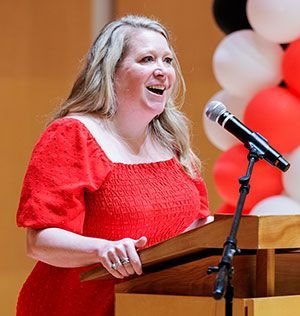
Sarah Foidel speaks at a podium.
Text Box

“It creates a direct win-win: Our students gain high-demand clinical experience that leads straight into the regional workforce, while local healthcare systems get immediate reinforcement to care for our aging population.”

— Sarah Foidel, Director, Pacific School of Occupational Therapy, on how GWEP provides placement opportunities for Pacific students

Body

Just as important for students are expanded opportunities for clinical placements thanks to Pacific’s participation in GWEP. In an age where there is a severe bottleneck for practical placements required for most students in Pacific’s graduate healthcare programs, Foidel has realized increased opportunities for students through OHSU, Washington County Health & Human Services, and other community-based health programs. Beyond fulfilling degree requirements, these expanded placements act as an immediate workforce pipeline — putting specialized providers onto the frontlines where Oregon's senior care shortages are most acute.

“We have established a connection with a national basic gerontology network through GWEP. There’s lots of resources that we can make available to our students, lots of openings for fellowships, internships, clinical placements, all from the connections that are made,” Foidel said. “It creates a direct win-win: Our students gain high-demand clinical experience that leads straight into the regional workforce, while local healthcare systems get immediate reinforcement to care for our aging population.”

Those connections are also providing new opportunities for capstone projects focusing on care for older adults. Recent projects connected to GWEP include anti-loneliness projects, updating health literacy brochures for Washington County, and even a project providing community education on fall risks in Hawaiʻi, where older adults are more often part of extended family living situations.

“There are lots of elders in Hawaiʻi and it is a very different culture than what we usually focus on,” Foidel said. “So we couldn’t just do our regular checklists, picking up throw rugs and such. We even looked at specific footwear they wear in the house.”

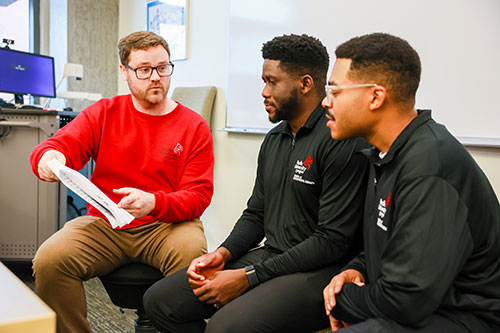
Professor Grayson Owens meets with two Pacific occupational therapy students.
Assistant Professor of Physical Therapy Grayson Owens (left) discusses the Otago balance program with students Randy Smalls OT '28 (center) and Matthew Garnett OT '28. Photo by Thomas Lal.
Legends Of The Fall (Prevention)

One of those capstone projects resulted in the development of classes to educate students in an evidence-based fall prevention program in older adults. Developed in New Zealand, the Otago Exercise Program is designed to promote enhancing balance, strength, mobility and exercises into someone’s daily routine. Studies have shown Otago helping reduce falls and fall-related injuries in older adults by as much as 40%.

Introduced to Pacific in a capstone project developed by Becky Kreger OT ‘24, the School of Occupational Therapy trained 12 students and three faculty members in Otago in 2025.

Fall prevention is key to any care program for older adults. According to the Centers for Disease Control and Prevention, 1 in 4 adults age 65 and older experience a fall each year. The Oregon Health Authority reported that falls accounted for over 115,000 emergency room visits and nearly 1,200 deaths in 2024.

Last spring, four occupational therapy students partnered with Washington County Health & Human Services to deliver Otago classes with local assisted living and retirement facilities. The classes were well received by students and residents alike.

“When the Otago team arrives, there are people in the waiting room waiting to talk with our students,” Foidel said. “They’re so excited, and it’s been fun to see it take off. The students are learning from it, and it serves as a clinical placement.”

The spring rotations included a study of 25 participants to study how Otago is improving their quality of life, including questions about mobility, activities outside of the home, self-confidence and loneliness. Foidel expects to publish the results of the study sometime in 2027.

“It’s not just whether you fall or not, but how does this affect quality of life?” she said. “How does this affect self-care? That evidence is not out there yet, so we’re excited to see the results.”

Eventually, Foidel sees a day where an Otago program is permanently integrated into a fall prevention clinic in the Pacific Interprofessional Clinic in Hillsboro, with the ability to work with patients in a clinical setting. Until then, she is happy with the opportunities both Otago and GWEP are enhancing placement opportunities for Pacific students.

“In a climate where placements are hard to find, this really builds an internal system,” Foidel said. “And I hope that we can expand this to physical therapy students, athletic training students, other students outside of occupational therapy.”

Publication Date